RUDIMENTS
WHAT ARE RUDIMENTS?
Rudiments in finger drumming on a 16 pad MIDI controller are analogous to the basic building blocks or 'alphabets' of drumming language. They are fundamental patterns and techniques that form the foundation of more complex rhythms and beats. In finger drumming, mastering rudiments is crucial as they expand your range of motion on the controller.
WHY RUDIMENTS?
Skill Development: Just as in traditional drumming, rudiments develop essential skills for finger drummers. They enhance coordination, timing, speed, and dynamic control.
Versatility: Learning rudiments enables a finger drummer to play a wide range of musical styles and rhythms, providing a comprehensive toolkit for creative expression.
Finger Independence: Borrowing from piano exercises, rudiments help in developing finger independence, crucial for playing intricate patterns and maintaining a steady rhythm with one hand while executing fills or accents with the other.
Muscle Memory: Consistent practice of rudiments builds muscle memory, making complex patterns feel more intuitive and fluid during performance.
Daily practice of rudiments for at least ten minutes is suggested for steady progress. Consistency matters more than the total duration, so even short daily sessions can yield noticeable improvements within a week.
HOW THIS SECTION IS ORGANIZED
This instructional section is thoughtfully structured to guide you through the development of finger drumming skills on a 16 pad MIDI controller. It's essential to begin with the easiest exercises and only advance when you feel comfortable performing each drill without difficulty. Here's how the progression is designed:
Start with the Basics: Begin with 'One Finger Drumming' exercises. These are the simplest and provide a solid foundation. Practice these until you can perform them smoothly and consistently.
Progressive Difficulty: As you become more adept, move on to 'Three Finger Drumming' exercises. These are moderately challenging and will build upon the skills learned in the previous section.
Advance to Complex Patterns: The 'Five Finger Rudiments' and 'Multi-finger Flams & Rolls' sections involve using more fingers simultaneously, demanding greater speed and accuracy.
Routine Warm-Ups: It's highly beneficial to use these rudiments as warm-up exercises at the start of each finger drumming session. They help in loosening up the fingers, improving coordination, and establishing a rhythmic mindset.
Foundational Beats: As you work through the exercises, you'll find they progressively lead to a set of must-know foundational beats. Mastering these beats is essential for handling a wide array of common 4/4 rhythms in popular Western music, enhancing your versatility as a finger drummer when committed to memory.
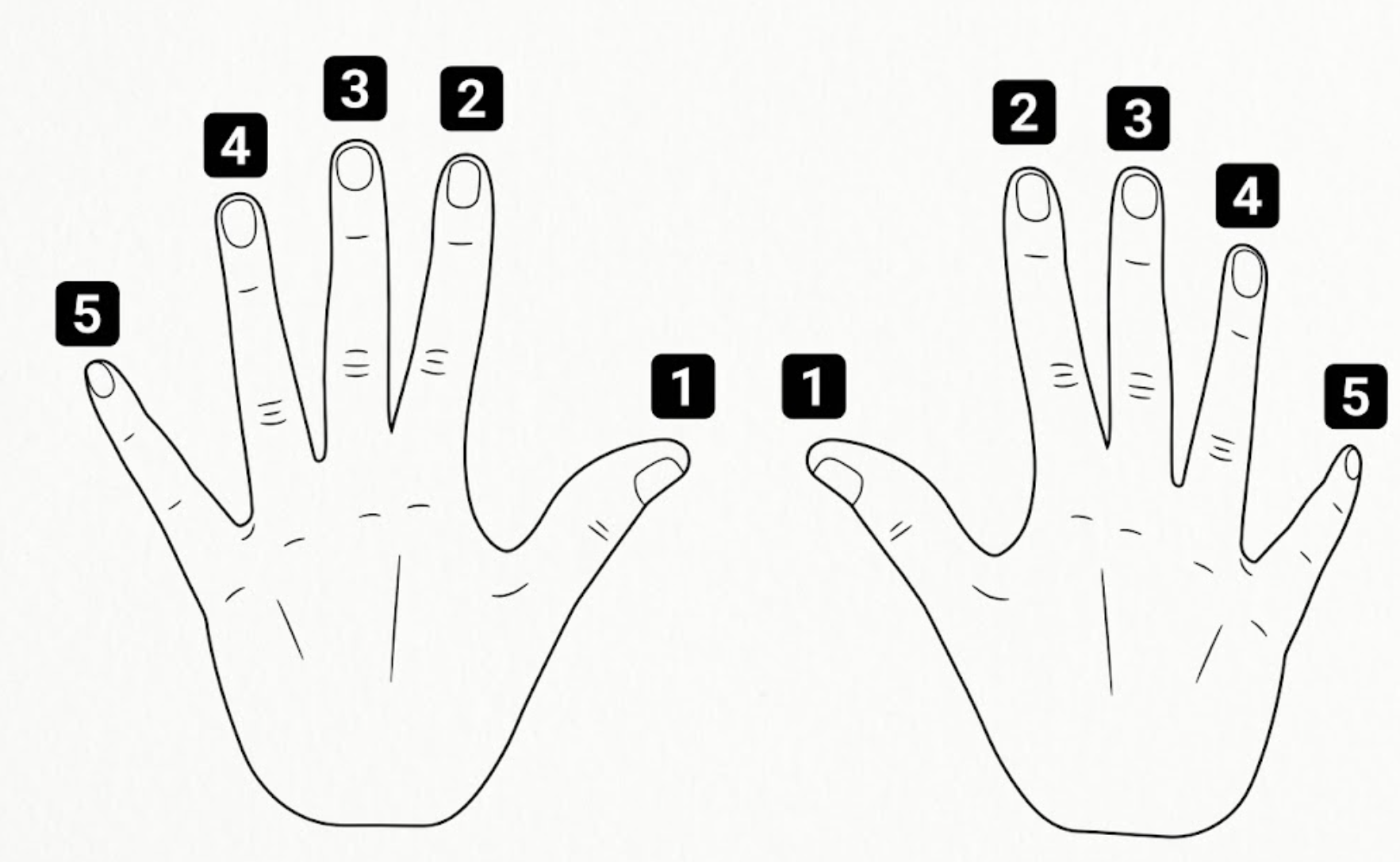
To differentiate each finger, this book assigns each finger (and thumb) a number from 1-5, respectively starting from the thumb (1), pointer fingers (2), middle fingers (3), ring fingers (4), and pinky fingers (5).
At times, a suggested hand will be indicated within a highlighted box surrounding a grid or pad. You can easily identify the corresponding hand by referring to the legend located above the pattern.
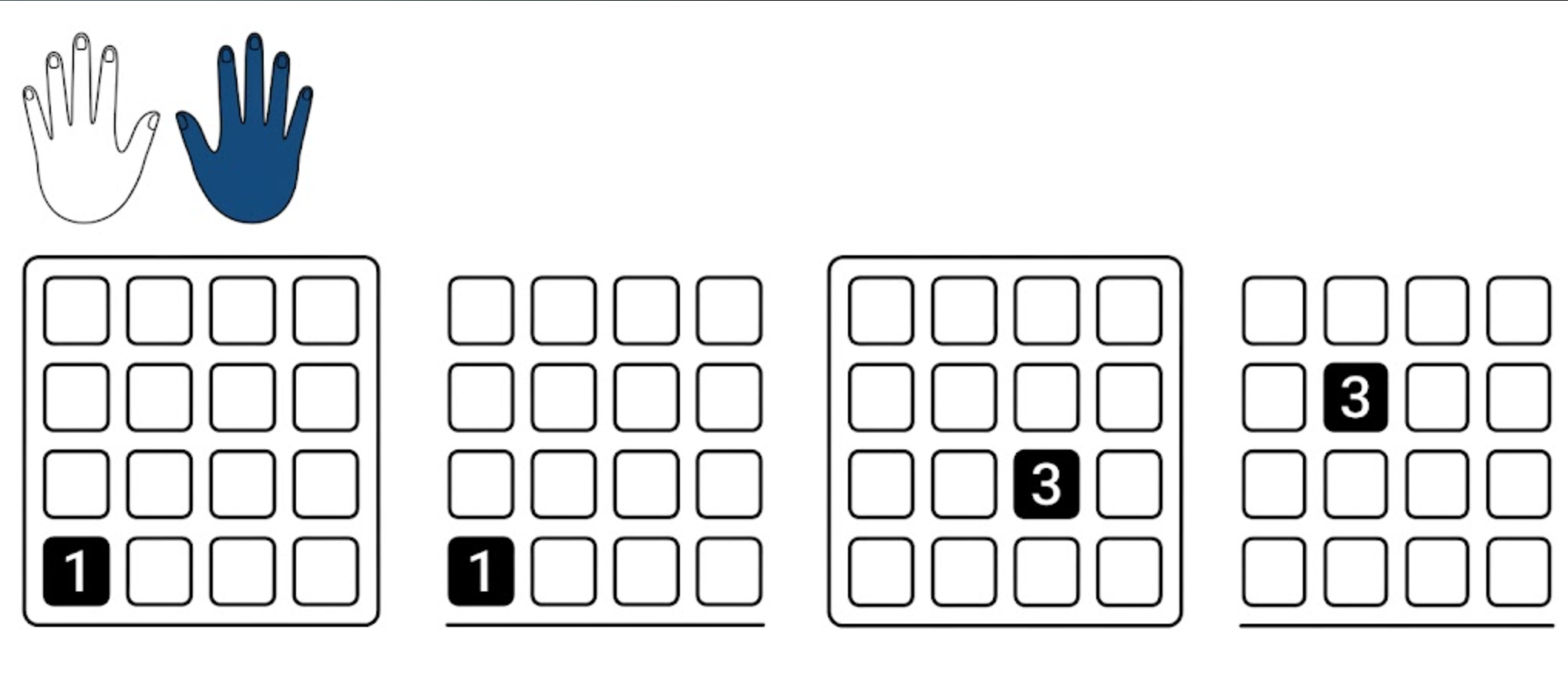
In the above example, the right hand (outlined) is suggested to trigger the pads on the first and third grids, while the left hand handles the pads on grids two and four.
Upon closer examination, you'll notice that each highlighted pad is assigned a specific finger for triggering. For instance, using finger (1) on the right hand to activate the pad on the first grid in the row.
ONE FINGER DRUMMING (easy)
These exercises are the simplest in the set and involve using just one finger on each hand. While the pointer (2) finger is commonly used to trigger the pads, feel free to experiment with whichever finger feels most comfortable for you.
RUDIMENT 1 · TWO HAND POINTER
Four On The Floor
1/4
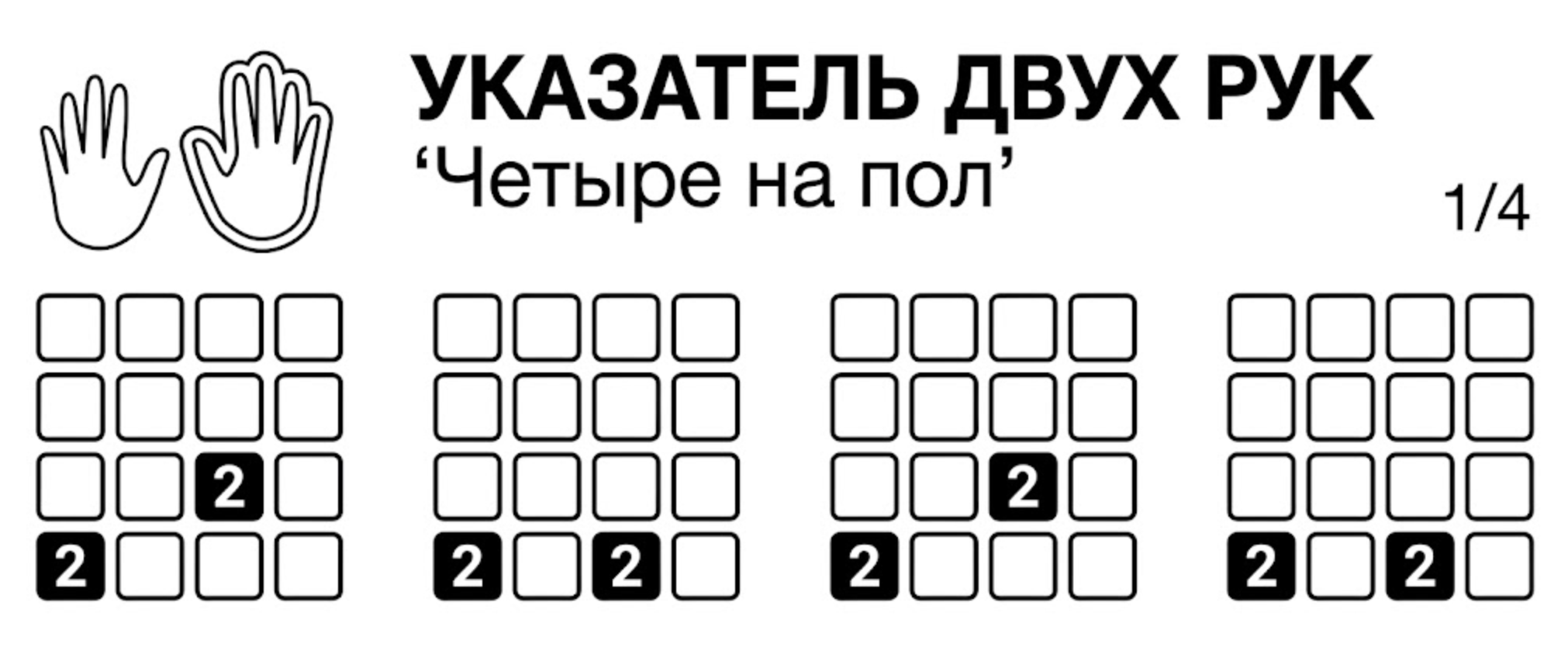
The familiar dance rhythm known as '4 on the floor' is illustrated in the grids above, each representing a 1/4 count. With your left hand, tap the pads marked with filled-in black squares (■) using your pointer finger (2). Your right hand will handle the pads outlined in the grid (□)—use your right pointer finger (2) to trigger these pads, as shown.
120BPM
Make it a habit to practice your rudiments with a metronome whenever you can. While mastering which pads to trigger is essential, playing steadily to the metronome's rhythm is equally crucial for refining your timing skills. If you don't have a physical metronome nearby, explore free apps available for download on your phone.
RUDIMENT 2 · TWO HAND POINTER
1/8th Hats
1/8
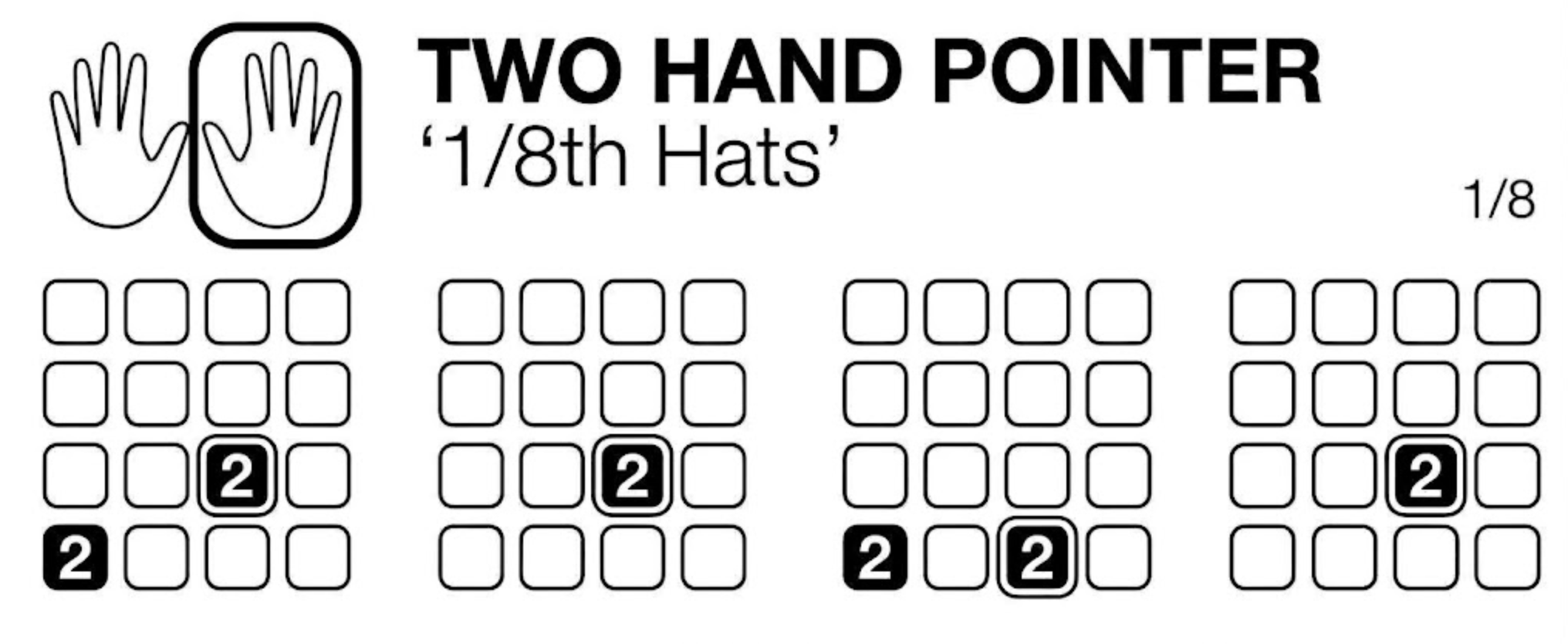
This variation of the '4 on the floor' rhythm features double-time hi-hats, now played as 1/8th notes. As evident from the fraction above the grid-row, each grid is now equivalent to an eighth note, making it twice as fast (or half the duration) as a quarter note.
RUDIMENT 3 · TWO HAND POINTER
Open Hats
1/8
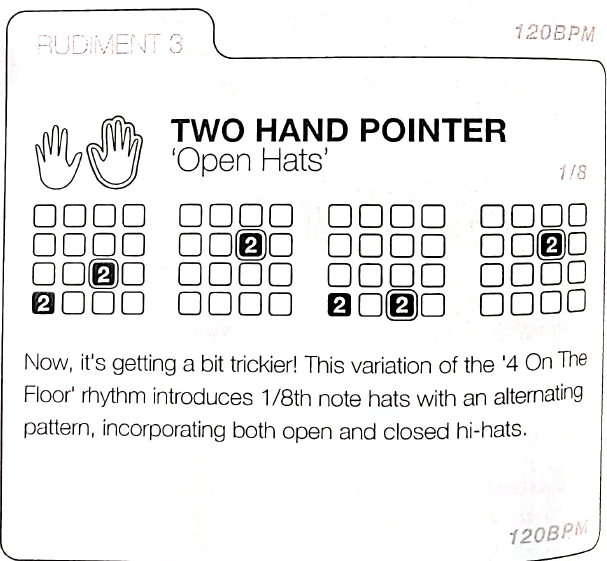
Now, it's getting a bit trickier! This variation of the '4 On The Floor' rhythm introduces 1/8th note hats with an alternating pattern, incorporating both open and closed hi-hats.
120BPM
RUDIMENT 4 · SWITCH HANDS
Four On The Floor
1/4
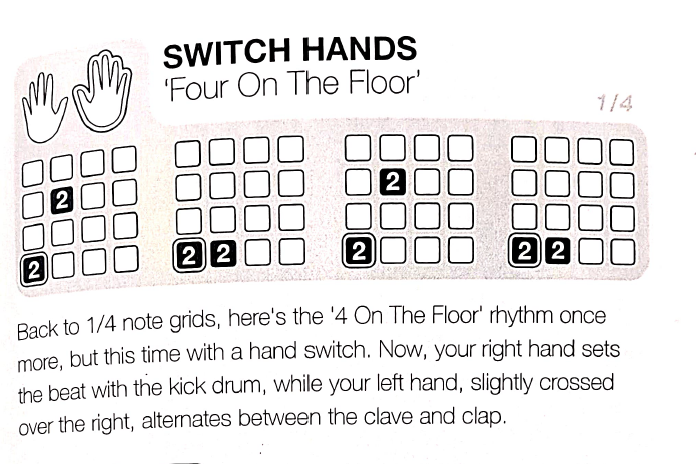
Back to 1/4 note grids, here's the '4 On The Floor' rhythm once more, but this time with a hand switch. Now, your right hand sets the beat with the kick drum, while your left hand, slightly crossed over the right, alternates between the clave and clap.
RUDIMENT 5 · SWITCH HANDS
1/8ths
1/8
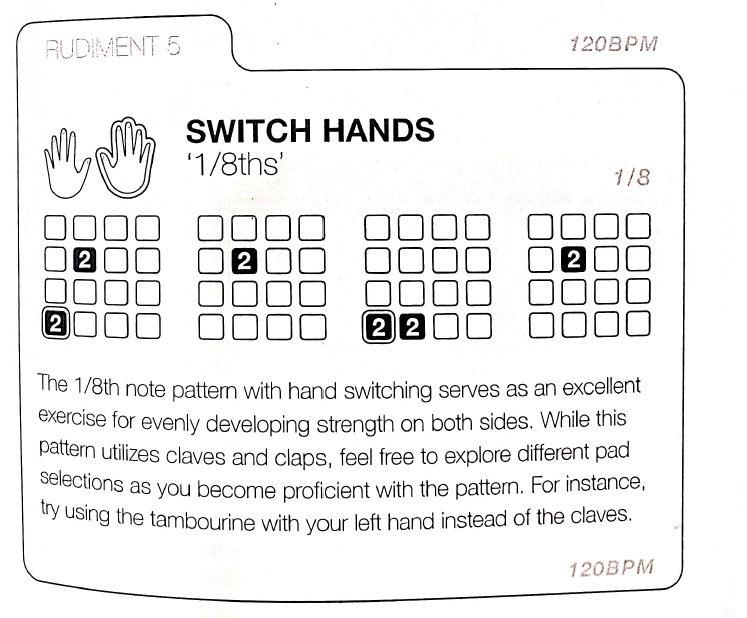
The 1/8th note pattern with hand switching serves as an excellent exercise for evenly developing strength on both sides. While this pattern utilizes claves and claps, feel free to explore different pad selections as you become proficient with the pattern. For instance, try using the tambourine with your left hand instead of the claves.
120BPM
RUDIMENT 6 · ROCK YOU
1/4 Hats
1/4
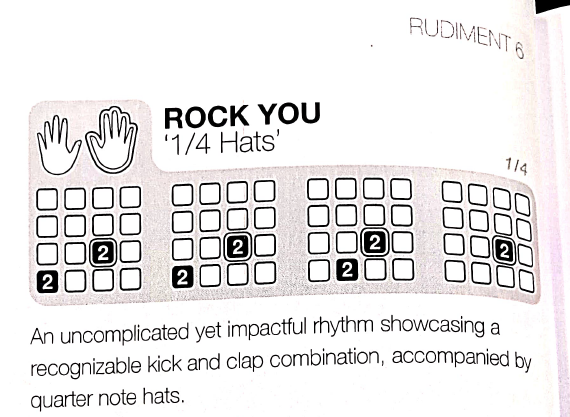
An uncomplicated yet impactful rhythm showcasing a recognizable kick and clap combination, accompanied by quarter note hats.
RUDIMENT 7 · ROCK YOU FASTER
1/8 Hats
1/8
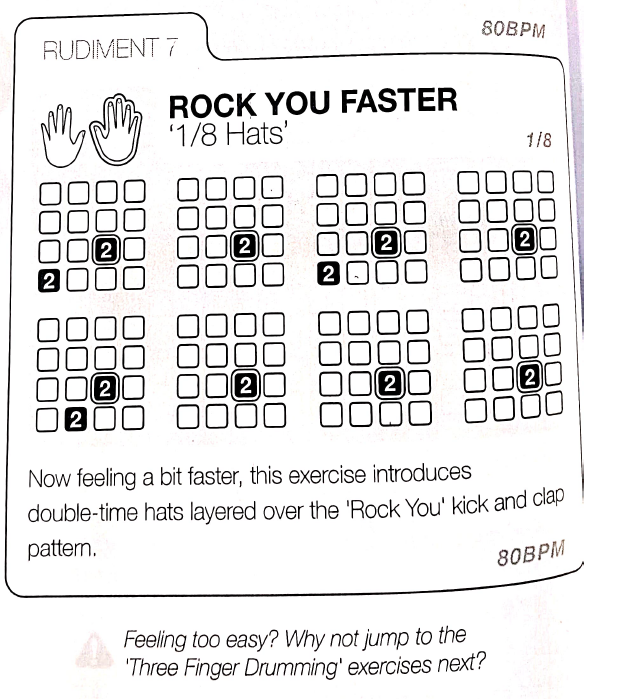
Now feeling a bit faster, this exercise introduces double-time hats layered over the 'Rock You' kick and clap pattern.
80BPM
Feeling too easy? Why not jump to the 'Three Finger Drumming' exercises next?
RUDIMENT 8 · SYNCOPATION
Dotted Eighth Kicks
1/16
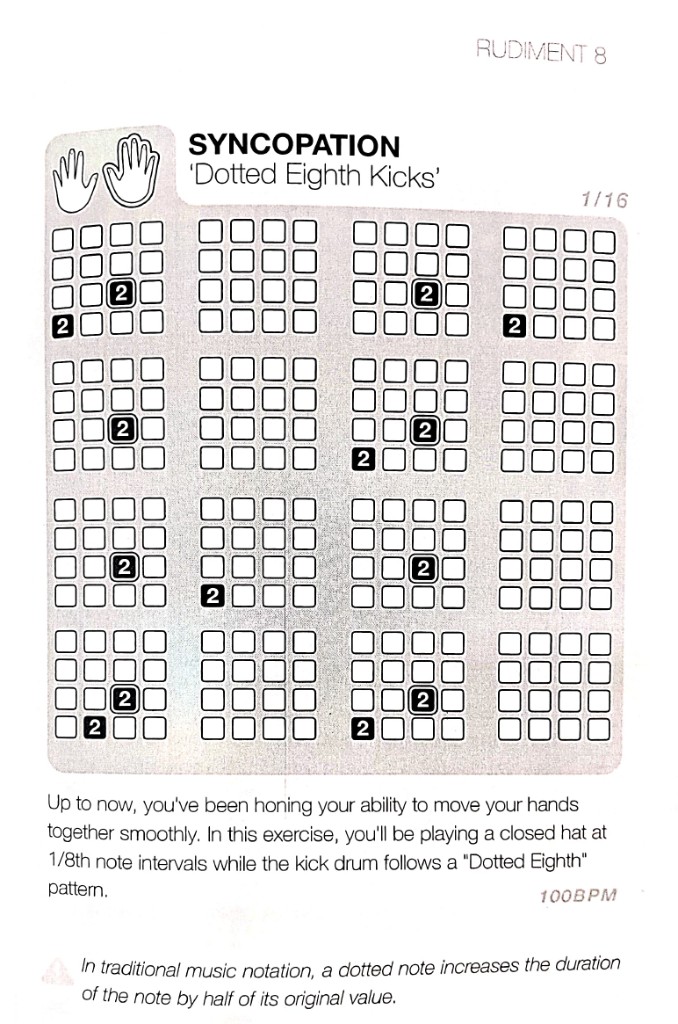
Up to now, you've been honing your ability to move your hands together smoothly. In this exercise, you'll be playing a closed hat at 1/8th note intervals while the kick drum follows a "Dotted Eighth" pattern.
100BPM
In traditional music notation, a dotted note increases the duration of the note by half of its original value.
RUDIMENT 9 · ALTERNATING HANDS
Chil Pollins
1/16
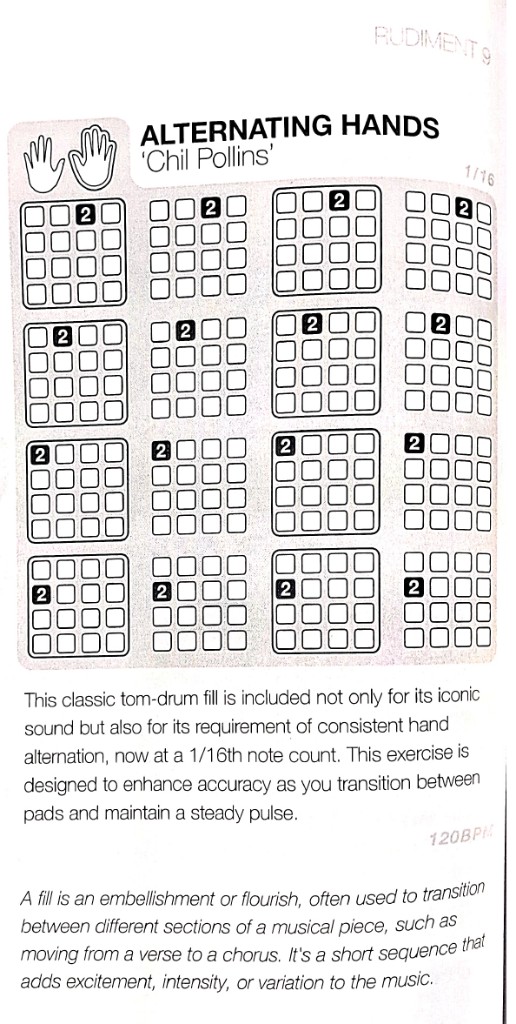
This classic tom-drum fill is included not only for its iconic sound but also for its requirement of consistent hand alternation, now at a 1/16th note count. This exercise is designed to enhance accuracy as you transition between pads and maintain a steady pulse.
120BPM
A fill is an embellishment or flourish, often used to transition between different sections of a musical piece, such as moving from a verse to a chorus. It's a short sequence that adds excitement, intensity, or variation to the music.
THREE FINGER DRUMMING (moderate)
Approaching the form you'll use for more intricate patterns, the following rudiments engage up to three digits on each hand. While each rudiment is initially presented for individual hands, you're encouraged to progress to practicing with both hands simultaneously once you've mastered the pattern on each hand separately.
RUDIMENT 10 · SAVE THE THREES
Four On The Floor
1/4
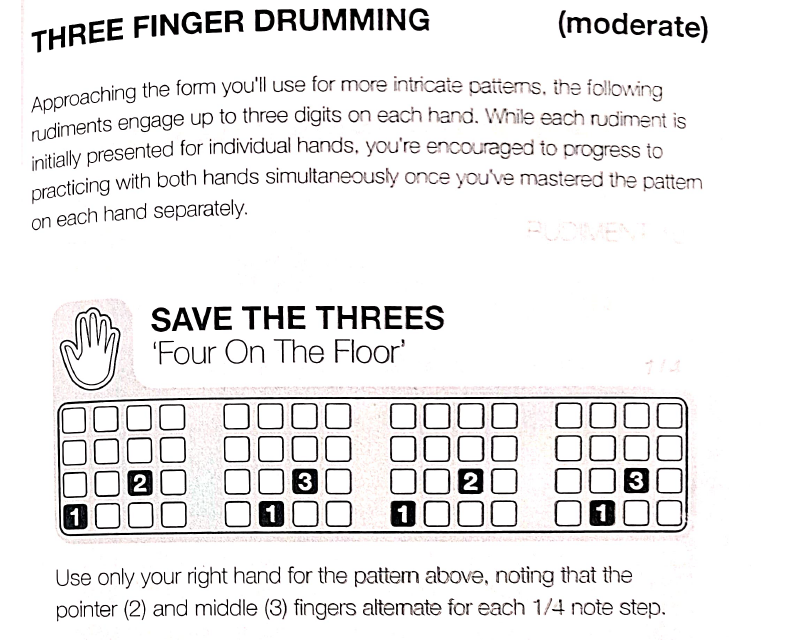
Use only your right hand for the pattern above, noting that the pointer (2) and middle (3) fingers alternate for each 1/4 note step.
RUDIMENT 11 · LEFT SIDE
Four On The Floor
1/4
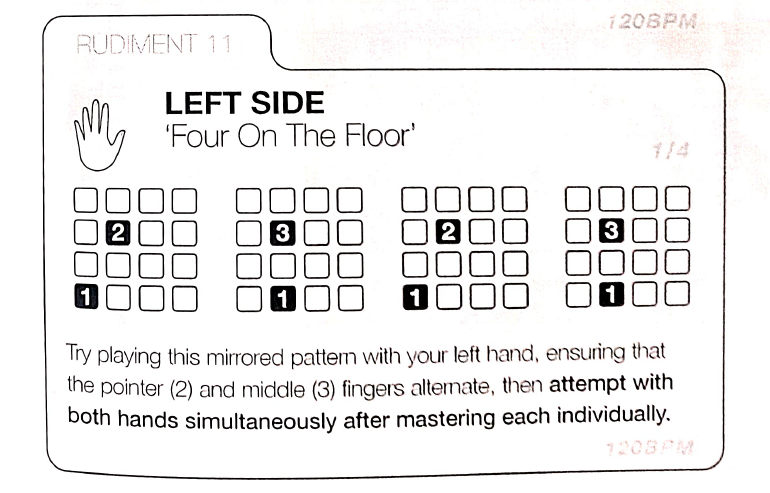
Try playing this mirrored pattern with your left hand, ensuring that the pointer (2) and middle (3) fingers alternate, then attempt with both hands simultaneously after mastering each individually.
120BPM
RUDIMENT 12 · ALTERNATING HANDS
Recursion
1/8
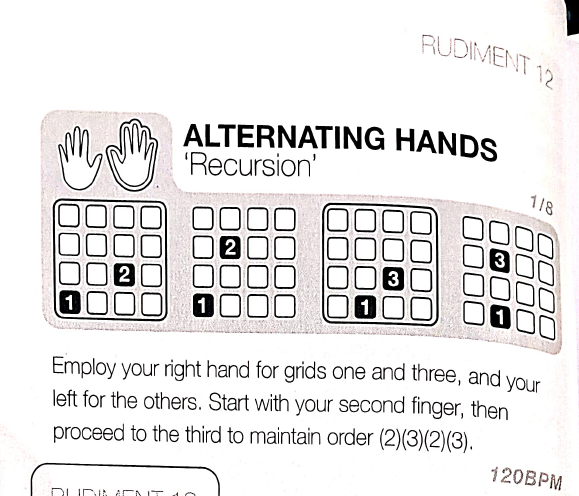
Employ your right hand for grids one and three, and your left for the others. Start with your second finger, then proceed to the third to maintain order (2)(3)(2)(3).
120BPM
RUDIMENT 13 · NOT GARAGE
It's Garidge, Mate
1/8
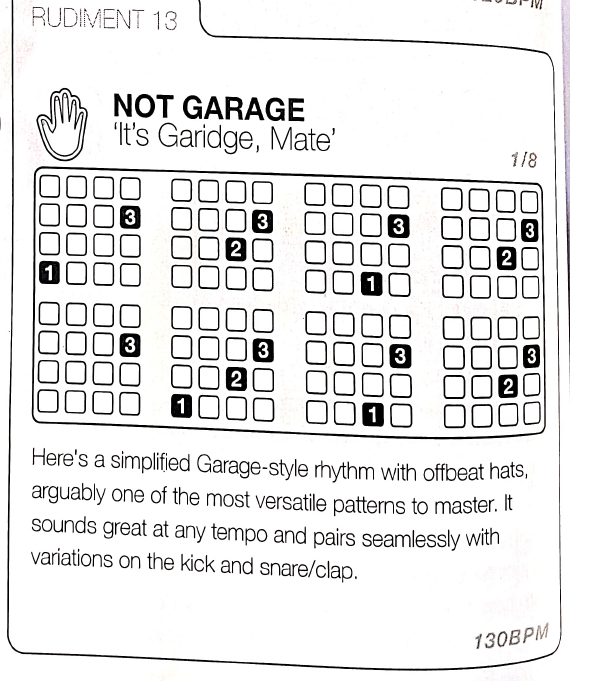
Here's a simplified Garage-style rhythm with offbeat hats, arguably one of the most versatile patterns to master. It sounds great at any tempo and pairs seamlessly with variations on the kick and snare/clap.
130BPM
RUDIMENT 14 · HIP HOP
Slow Trap
1/8
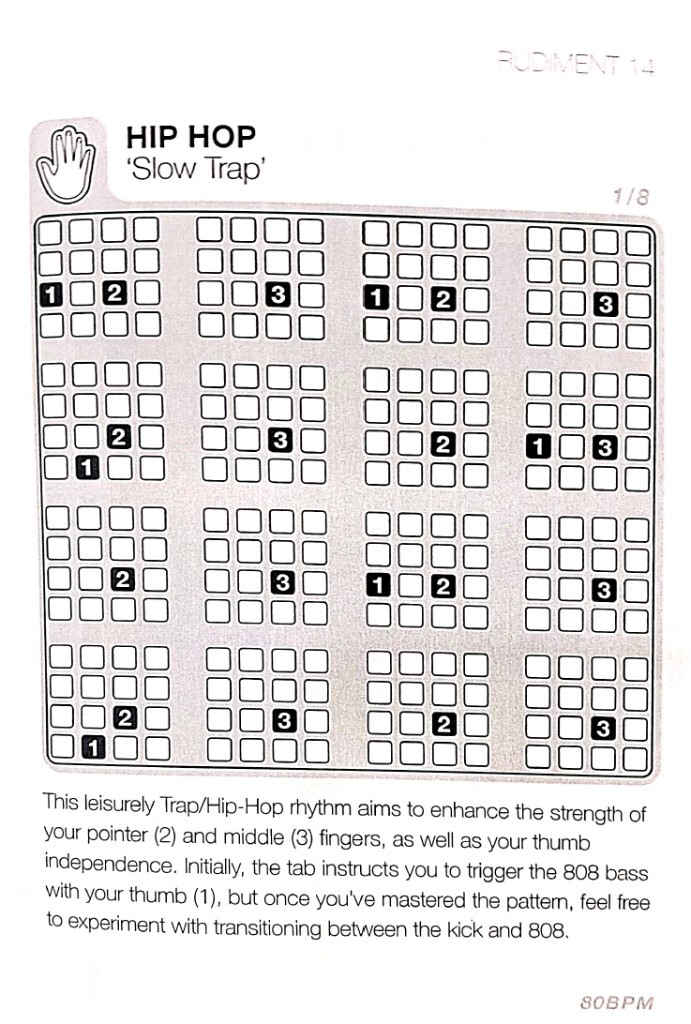
This leisurely Trap/Hip-Hop rhythm aims to enhance the strength of your pointer (2) and middle (3) fingers, as well as your thumb independence. Initially, the tab instructs you to trigger the 808 bass with your thumb (1), but once you've mastered the pattern, feel free to experiment with transitioning between the kick and 808.
80BPM
RUDIMENT 15 · SWITCH HANDS
Hip Hop
1/8
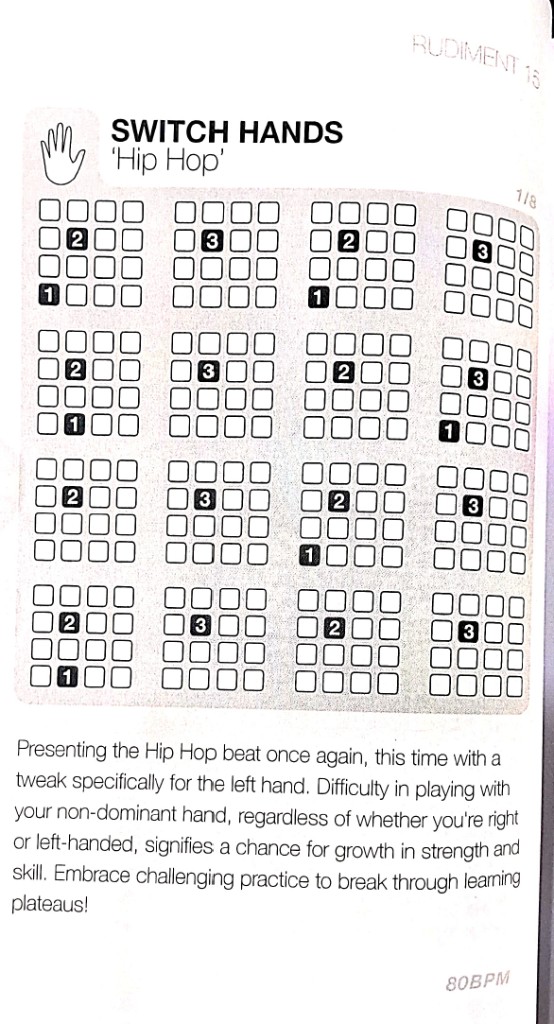
Presenting the Hip Hop beat once again, this time with a tweak specifically for the left hand. Difficulty in playing with your non-dominant hand, regardless of whether you're right or left-handed, signifies a chance for growth in strength and skill. Embrace challenging practice to break through learning plateaus!
80BPM
RUDIMENT 16 · ALTERNATING HANDS
Is There An Echo In Here?
1/16
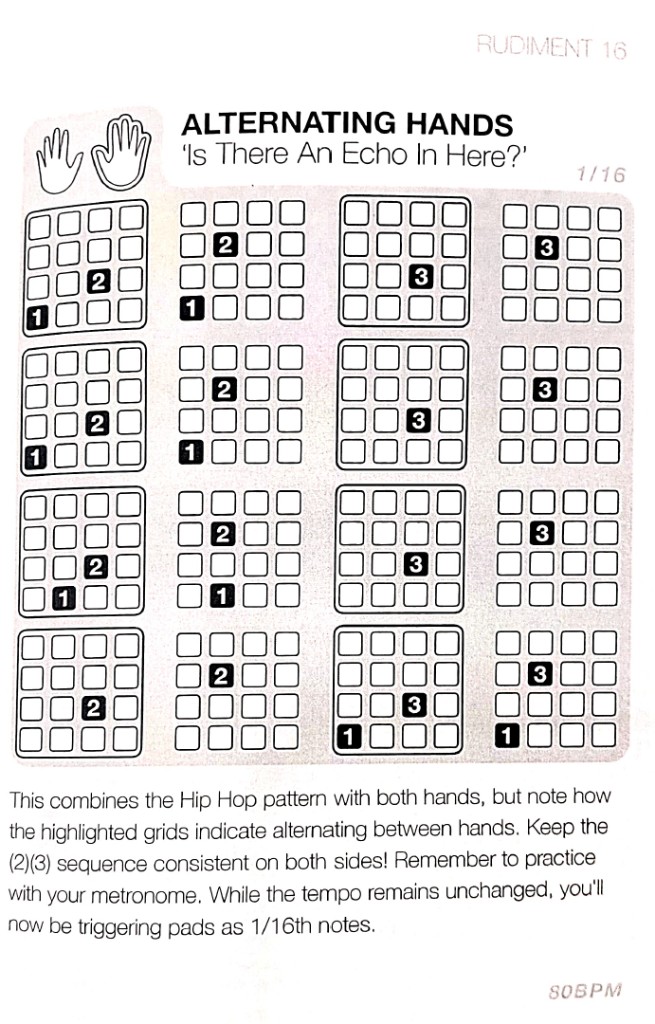
This combines the Hip Hop pattern with both hands, but note how the highlighted grids indicate alternating between hands. Keep the (2)(3) sequence consistent on both sides! Remember to practice with your metronome. While the tempo remains unchanged, you'll now be triggering pads as 1/16th notes.
80BPM
RUDIMENT 17 · KICK ON '&'
With A Little Stretch
1/8
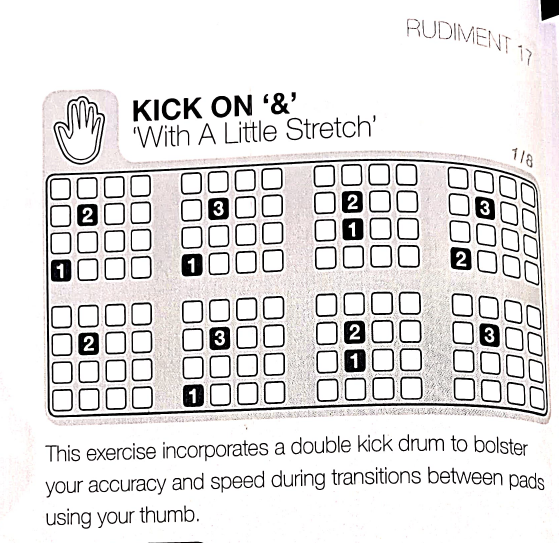
This exercise incorporates a double kick drum to bolster your accuracy and speed during transitions between pads using your thumb.
RUDIMENT 18 · SWITCH HANDS
Kick On & (With A Stretch)
1/8
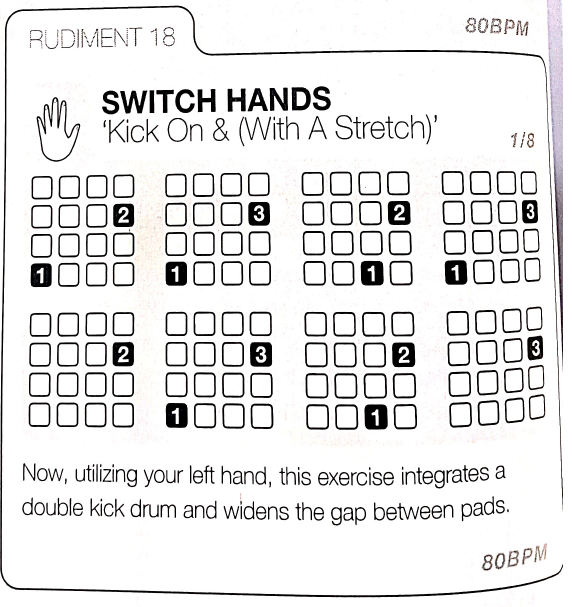
Now, utilizing your left hand, this exercise integrates a double kick drum and widens the gap between pads.
80BPM
RUDIMENT 19 · ROLLING RIGHT
A Personal Favourite
1/16
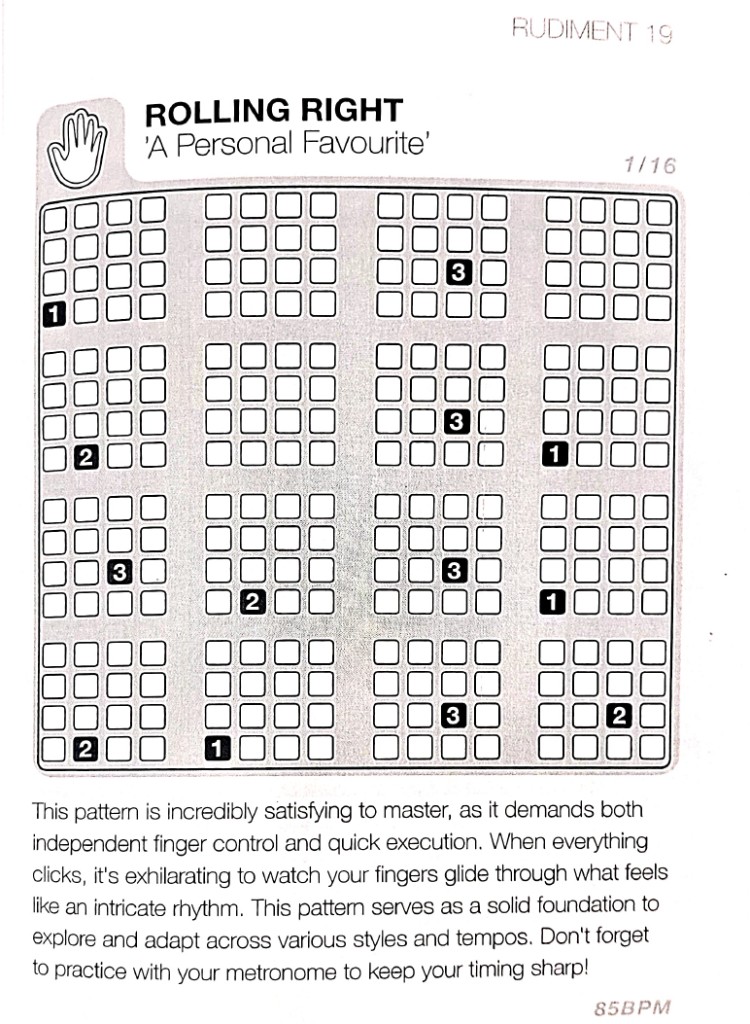
This pattern is incredibly satisfying to master, as it demands both independent finger control and quick execution. When everything clicks, it's exhilarating to watch your fingers glide through what feels like an intricate rhythm. This pattern serves as a solid foundation to explore and adapt across various styles and tempos. Don't forget to practice with your metronome to keep your timing sharp!
85BPM
RUDIMENT 20 · ROLLING LEFT
Switch Those Hands
1/8
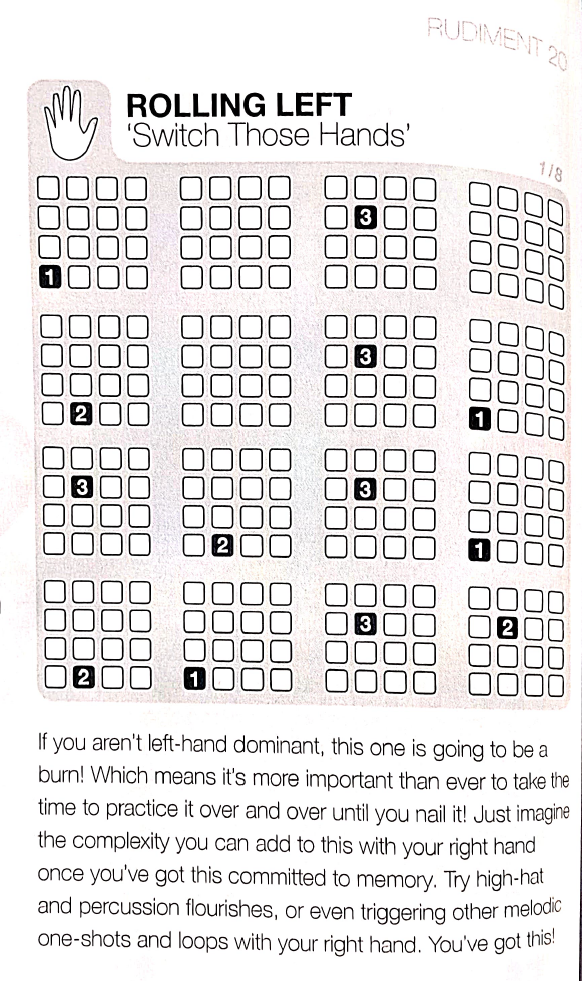
If you aren't left-hand dominant, this one is going to be a burn! Which means it's more important than ever to take the time to practice it over and over until you nail it! Just imagine the complexity you can add to this with your right hand once you've got this committed to memory. Try high-hat and percussion flourishes, or even triggering other melodic one-shots and loops with your right hand. You've got this!
FIVE FINGER DRUMMING (harder)
Getting a bit tougher now! These next rudiments use all five fingers and are similar to some of the strength-building exercises in the book. The added challenge is hitting the right pads accurately while you practice. It's a fun way to build up your precision and control!
If you're feeling any signs of mental or physical fatigue, take a break! Rest for a while, do some light stretches, stay hydrated, and come back to it later. Taking care of yourself will help you perform better in the long run.
RUDIMENT 21 · 1, 3, 2, 4, 3, 5, 2, 4
5 digits
1/4
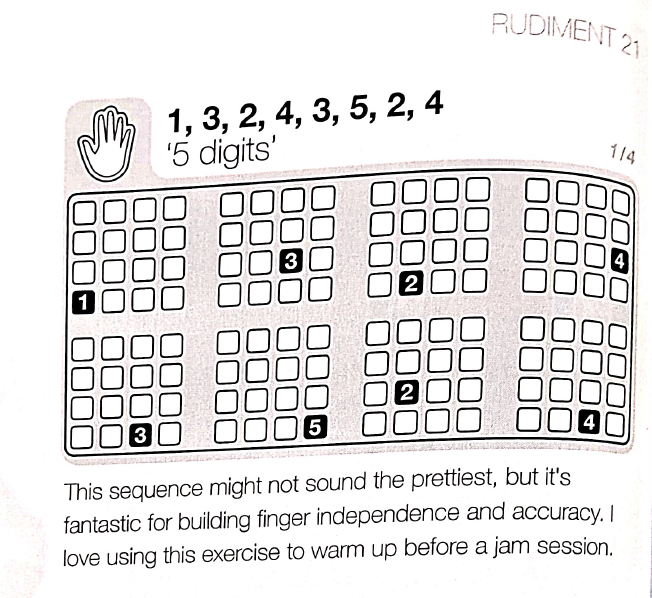
This sequence might not sound the prettiest, but it's fantastic for building finger independence and accuracy. I love using this exercise to warm up before a jam session.
RUDIMENT 22 · 1, 3, 2, 4, 3, 5, 2, 4
Left Side
1/4
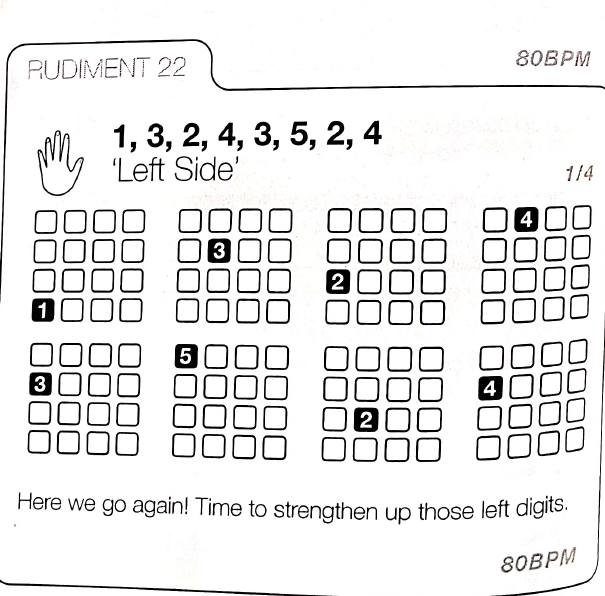
Here we go again! Time to strengthen up those left digits.
80BPM
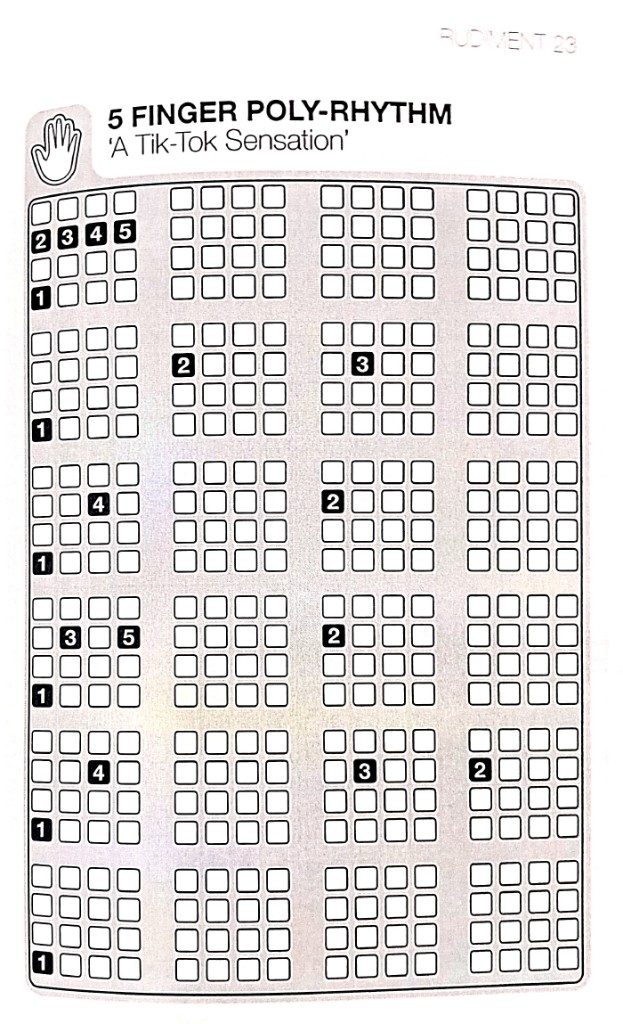
RUDIMENT 23 · 5 FINGER POLY-RHYTHM
A Tik-Tok Sensation
RUDIMENT 24 · SPEED ROLL
Snare, Toms, Percs
1/16
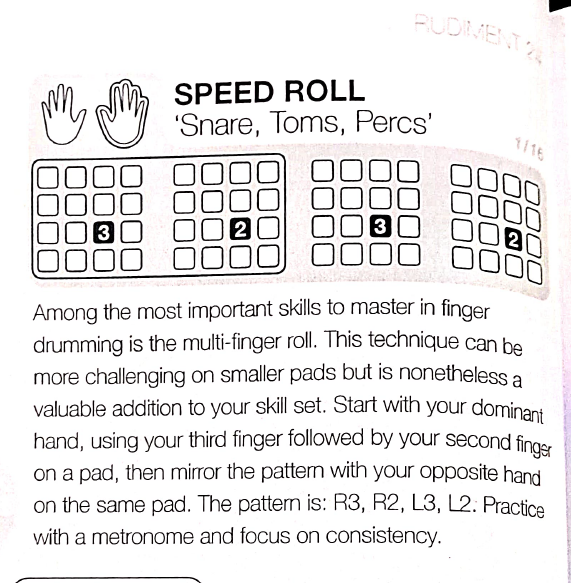
Among the most important skills to master in finger drumming is the multi-finger roll. This technique can be more challenging on smaller pads but is nonetheless a valuable addition to your skill set. Start with your dominant hand, using your third finger followed by your second finger on a pad, then mirror the pattern with your opposite hand on the same pad. The pattern is: R3, R2, L3, L2. Practice with a metronome and focus on consistency.
RUDIMENT 25 · TRIPLES
A Triple Roll
1/16
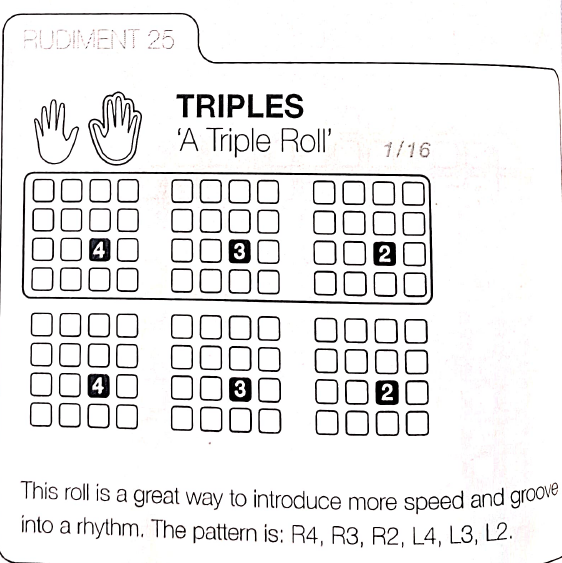
This roll is a great way to introduce more speed and groove into a rhythm. The pattern is: R4, R3, R2, L4, L3, L2.
FLAMS
What the heck is a flam?
A flam is a drumming technique characterized by playing two drum strokes nearly at the same time; the first, called the grace note, is played slightly earlier and softer than the second, which is the main, louder note.
Practicing flams can be akin to practicing drum rolls. One effective approach is to use your middle finger (3) to gently tap a pad, quickly followed by a forceful strike on the same pad with your index finger (2). Achieving the correct velocity and volume for the grace note might be challenging, but consistent practice will aid in mastering the technique.
Alternatively, for easier execution, consider using two pads instead of one. Set one pad to a lower volume or sensitivity, and strike the pads in quick succession—one with each finger.